Deep-Sea Debugging: When the Best Fix is Visibility, Not a Smoking Gun
There is a specific kind of dread reserved for inheriting a legacy application that has worked flawlessly for years without a single log line, only for it to inexplicably start failing in production.
I recently found myself diving into the deep end of a legacy VB application paired with a heavy database backend. No detailed logging. No health checks. Just years of "it just works" history—until it didn’t.
I spent days playing detective. I added meticulous logging, combed through over 100 stored procedures, and reviewed upwards of 5,000 lines of code trying to recreate the failure.
The result? I couldn't reproduce it. I couldn't find a single definitive line of code to point to and say, "There it is. That's the bug."
But the mission wasn't a failure. Far from it.
Building Foundations in the Dark
When you can't find the exact source of a ghost in the machine, you don’t just throw your hands up. You build a foundation so that the ghost has nowhere left to hide.
Instead of chasing a phantom, I focused my contributions on transforming the application's underlying ecosystem:
- Detailed Instrumentation: I injected robust logging across the entire execution path.
- Active Health Checks: I implemented health checks to continuously monitor the system's vital signs.
- State Isolation: I introduced database snapshots to capture the exact state of the data before and after processing windows, preventing data corruption when things do go sideways.
Value Isn't Always a Code Fix
In engineering, we are conditioned to think that a successful debugging session ends with a triumphant pull request that deletes the "bad code." But sometimes, the true value of a senior engineer is shifting a system from opaque to observable.
Even though we didn't get our "aha!" moment with a specific bug fix, the product is in a completely different tier now:
- Absolute Visibility: We finally know exactly what is happening under the hood. The black box is completely gone.
- Immediate Detection: If—or when—this inexplicable issue happens again, we won't be guessing. The newly implemented alerts and logs will pinpoint the exact state, the exact stored procedure, and the exact millisecond the failure occurs.
- Blast Radius Control: By utilizing database snapshots and health checks, we've built a proactive perimeter. The system can now fail gracefully and recover without corrupting foundational data.
The Takeaway: Turn on the Lights
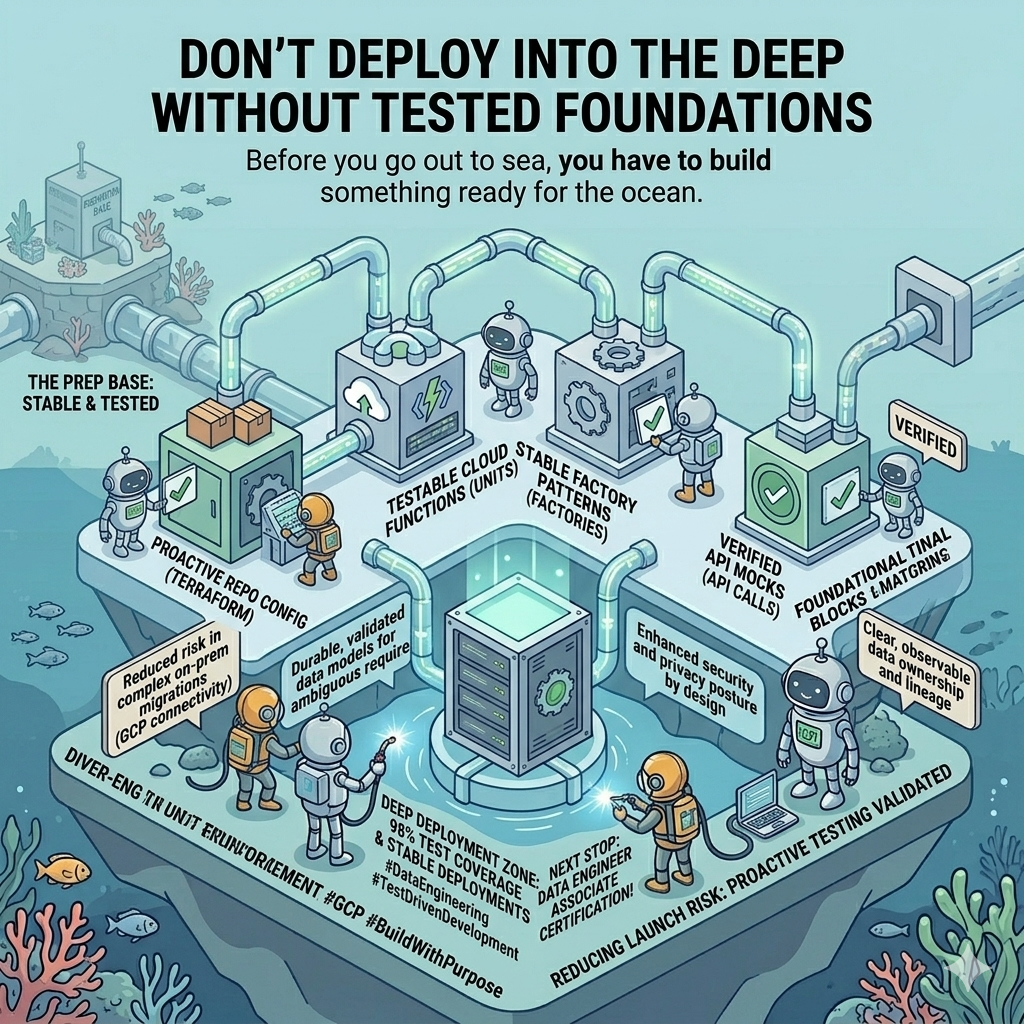
Before you deploy code out into the deep, you have to build something ready for the ocean. Legacy code that runs without logs isn't actually "stable"—it’s just lucky. The moment the environment or data profile shifts, that luck runs out.
Tracing 5,000 lines of code taught me that when you can't fix the past, you build the visibility tools to secure the future. We didn't find the smoking gun. We did something better: we turned on the lights.
Comments (0)
No comments yet. Be the first to share your thoughts!